



A Tool for Strategic Clarity
Our material ESG issues are prioritized in a materiality matrix, based on a comprehensive materiality assessment, to identify the key ESG topics most material to our business and stakeholders. Following the GRI materiality assessment methodology, the process was informed by internal and external stakeholder engagement, peer benchmarking, and the expectations of ESG rating agencies. The process and results were reviewed and approved by the relevant ESG Board Committee and the Board of Directors. The assessment identified 15 material topics, categorized under the five ESG pillars, reflecting our strategic priorities, operational risks, and opportunities.
What Changed in 2025
Our materiality assessment is reviewed at least once every three years in line with the requirement of our ESG Policy Framework. In the latest update of the ESG Policy Framework carried out in 2025, the topic “Environmental Management” was reclassified as “Climate Change and Environmental Management”, reflecting the growing urgency for climate-related risk, mitigation and adaptation, and to align with national priorities on decarbonization. To further strengthen our capacity to anticipate, manage, and address these material topics in line with this policy framework, in 2025, we continued to explore the integration of ESG material risks into the existing risk management framework, in line with regulatory direction and supervisory expectations. Development of mitigation strategies, monitoring, and reporting are expected to follow suit and will be conducted in accordance with relevant regulatory guidance.
We continue to monitor our ESG KPIs and targets through a structured performance management process. Each ESG KPI is tracked regularly in coordination with the relevant business lines to ensure accuracy, accountability, and alignment with our strategic priorities. Insight from this monitoring process informs our management decisions and supports continuous improvement across environmental, social, and governance areas.
Additionally, our ESG KPIs and target performance are regularly communicated to management to ensure clear visibility and alignment with the Bank’s ESG strategic priorities.
Materiality Matrix
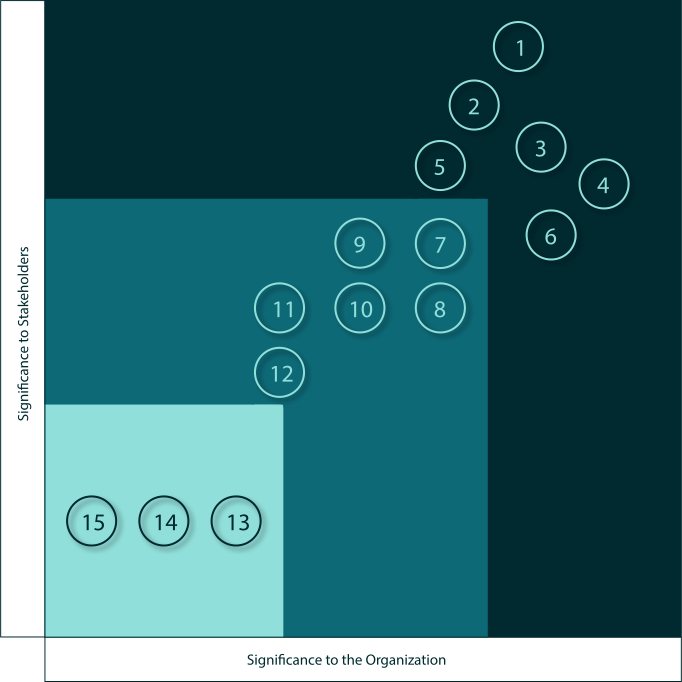
- 1 Governance, Accountability, Transparency, and Ethics
- 2 Financial and Economic Performance
- 3 Risk Management
- 4 Responsible Customer Relations and Satisfaction
- 5 Data Privacy and Security
- 6 Financial Inclusion and Accessibility
- 7 Digitalization
- 8 Employee Engagement, Wellbeing, and Satisfaction
- 9 Diversity and Inclusion
- 10 Sustainable Lending and Investment
- 11 Talent Attraction, Retention, and Development
- 12 Community Investment
- 13 Nationalization
- 14 Climate Change and Environmental Management
- 15 Responsible Procurement